
This growing demand has made a PGDM in Marketing Analytics one of the most promising management specializations today. Students who choose this field gain a strong combination of marketing knowledge, analytical skills, and digital expertise that modern industries actively seek.
At MBS Global Academy, we focus on preparing students for this changing business landscape through practical learning and industry-focused education. As the demand for data-driven professionals increases, the popularity of the Marketing Analytics course in India continues to rise among aspiring management students.
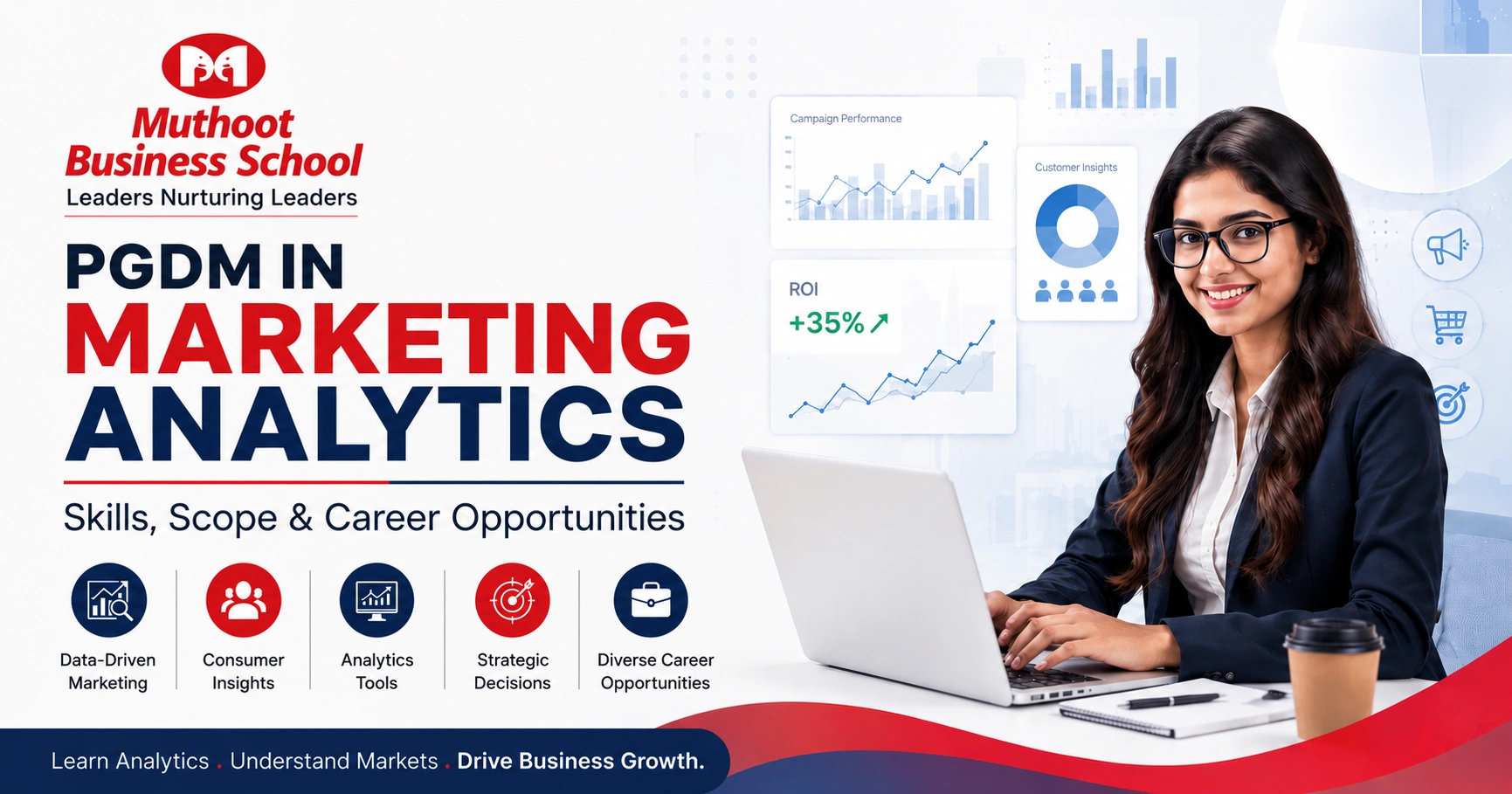
A PGDM in Marketing Analytics is a specialized management program that blends marketing concepts with analytics and technology. The course helps students understand how businesses use customer data and market insights to improve marketing performance and business strategies.
Unlike traditional marketing programs, this specialization focuses on analytical thinking and data-based decision-making. Students learn how to evaluate campaign performance, understand customer behaviour, and identify market opportunities using modern tools and techniques.
At MBS Global Academy, we believe students should learn through practical exposure and real-world business understanding. Our approach helps students develop industry-ready skills that match current market expectations.
The program introduces students to several important aspects of modern marketing and analytics.
Students learn how to study customer and market data to identify trends, measure performance, and support business decisions.
The course provides knowledge about digital platforms, social media campaigns, search marketing, and online customer engagement.
Understanding customer preferences and buying patterns is an important part of marketing analytics. Students learn how businesses use these insights to improve customer experiences.
Students gain exposure to tools used for campaign tracking, reporting, and business analysis, helping them build practical industry knowledge.
The program also develops problem-solving and decision-making skills essential in modern business environments.
Businesses today rely heavily on customer insights and measurable results. Marketing decisions are no longer based only on assumptions or creativity. Companies now use analytics to understand what customers want and how campaigns perform.
This shift has significantly increased the Scope of Marketing Analytics in India across industries. Businesses want professionals who can combine marketing expertise with analytical thinking.
The rise of digital platforms, e-commerce, artificial intelligence, and automation has further strengthened the need for analytics professionals. As businesses continue to embrace technology, marketing analytics is becoming an essential part of business strategy.
The Scope of Marketing Analytics in India continues to expand because organizations across sectors are investing in data-driven business strategies.
Industries such as e-commerce, retail, healthcare, banking, finance, IT, and media are actively hiring professionals with analytics expertise. Companies use marketing analytics to improve customer engagement, track campaign performance, and make informed business decisions.
India’s growing digital economy has also created new opportunities for analytics professionals. As more businesses shift online, the demand for experts who can understand digital behaviour and business data is increasing rapidly.
At MBS Global Academy, we prepare students to adapt to these changing industry demands through career-oriented learning experiences.
One of the biggest advantages of pursuing a PGDM in Marketing Analytics is the wide range of career paths available after graduation.
Marketing Analysts study customer trends, campaign performance, and market insights to improve business strategies and customer engagement.
These professionals manage online campaigns, digital branding, social media strategies, and customer communication platforms.
Data Analysts work with business information to identify patterns, prepare reports, and support strategic decision-making.
These professionals use analytical insights to improve operational efficiency and business performance.
Brand professionals focus on building brand value, customer loyalty, and effective communication strategies.
These PGDM Marketing Analytics career opportunities are growing rapidly because businesses across industries depend on data-driven marketing strategies.
Marketing analytics professionals are in demand across several industries because businesses today prioritize customer insights and measurable performance.
IT companies and technology firms actively hire analytics professionals to improve digital strategies and customer engagement. E-commerce businesses also rely heavily on analytics to understand customer behaviour and improve online sales.
Retail brands, digital agencies, financial institutions, media companies, startups, and consulting firms are also creating excellent opportunities in this field.
At MBS Global Academy, we focus on helping students understand industry expectations through practical exposure and professional learning experiences.
A PGDM in Marketing Analytics offers students a future-focused career path that combines creativity, strategy, and technology.
The course provides strong career growth opportunities because analytics has become essential across industries. Students gain practical knowledge, industry exposure, and analytical skills that improve employability and long-term career development.
At MBS Global Academy, we focus on creating confident professionals who can adapt to changing business environments and contribute effectively to modern organizations.
The demand for analytics and marketing professionals continues to grow as businesses increasingly adopt digital and data-driven strategies. A PGDM in Marketing Analytics helps students build the skills required to succeed in today’s competitive business world.
As the Scope of Marketing Analytics in India continues to expand, students can explore rewarding careers across industries such as digital marketing, analytics, business intelligence, and brand management. With the right guidance and industry-focused learning, students can build successful and future-ready careers in this rapidly growing field.
Answer:
A PGDM in Marketing with Analytics is a specialized management program that combines traditional marketing principles with data analytics, digital marketing, and business intelligence. It helps students develop skills to analyze customer behavior, evaluate marketing performance, and make data-driven business decisions.
Answer:
Graduates can pursue various roles such as Marketing Analyst, Digital Marketing Manager, Data Analyst, Business Intelligence Executive, Brand Manager, CRM Specialist, and Market Research Analyst. These roles are in high demand across industries that rely on customer insights and digital marketing strategies.
Answer:
Students develop skills in data analysis, digital marketing, consumer behavior analysis, campaign performance tracking, market research, strategic decision-making, and the use of analytics tools. These skills help them succeed in today's data-driven business environment.
Answer:
The scope of Marketing with Analytics in India is expanding rapidly due to the growth of digital businesses, e-commerce, artificial intelligence, and data-driven marketing. Organizations across sectors are seeking professionals who can transform data into actionable business insights.
Answer:
Marketing Analytics professionals are hired by industries such as e-commerce, retail, banking, finance, healthcare, IT, media, consulting, telecommunications, and digital marketing agencies. These industries use analytics to improve customer engagement, marketing performance, and business growth.
Answer:
Students should choose a PGDM in Marketing with Analytics because it offers strong career prospects, industry-relevant skills, and opportunities in high-growth sectors. The program equips graduates with a blend of marketing knowledge, analytical expertise, and technological understanding, making them valuable assets for modern organizations.